
WSOP Main Event Debates Shot Clock Implementation Amidst Tanking Concerns
The World Series of Poker's introduction of a shot clock on Day 7 of the Main Event has ignited a lively discussion among players regarding the best approach to manage excessive tanking and maintain game flow.
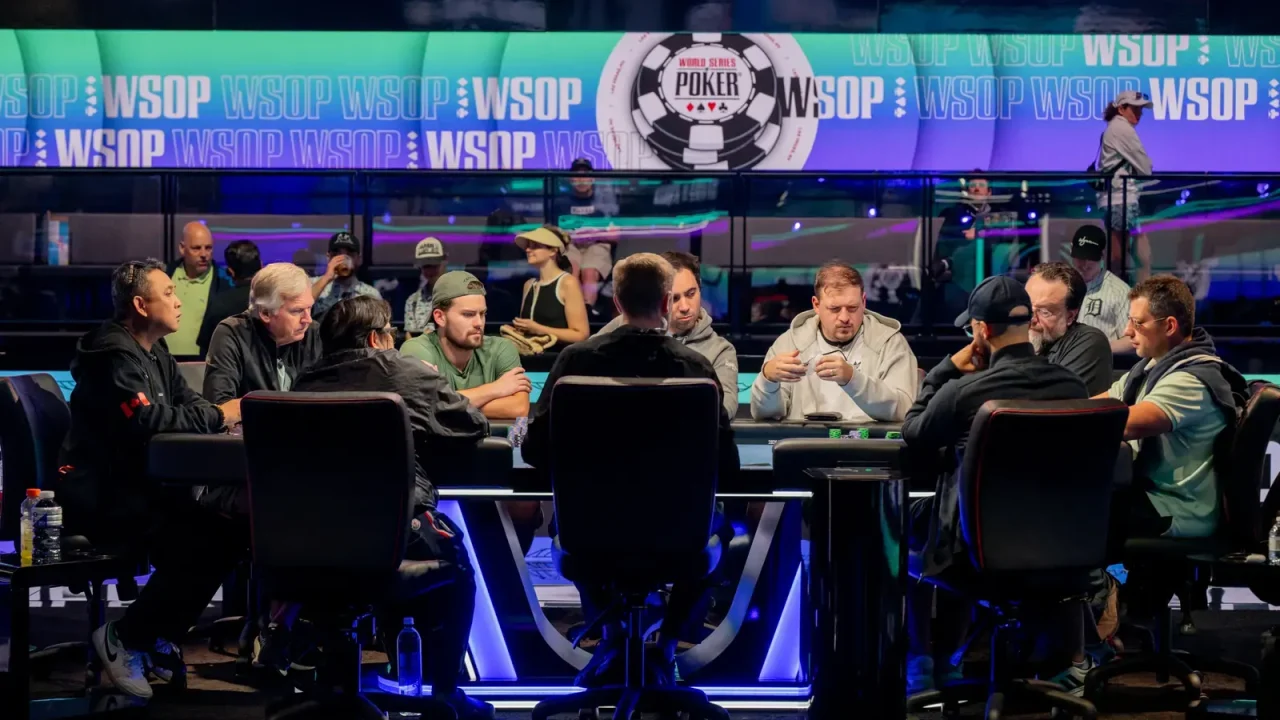
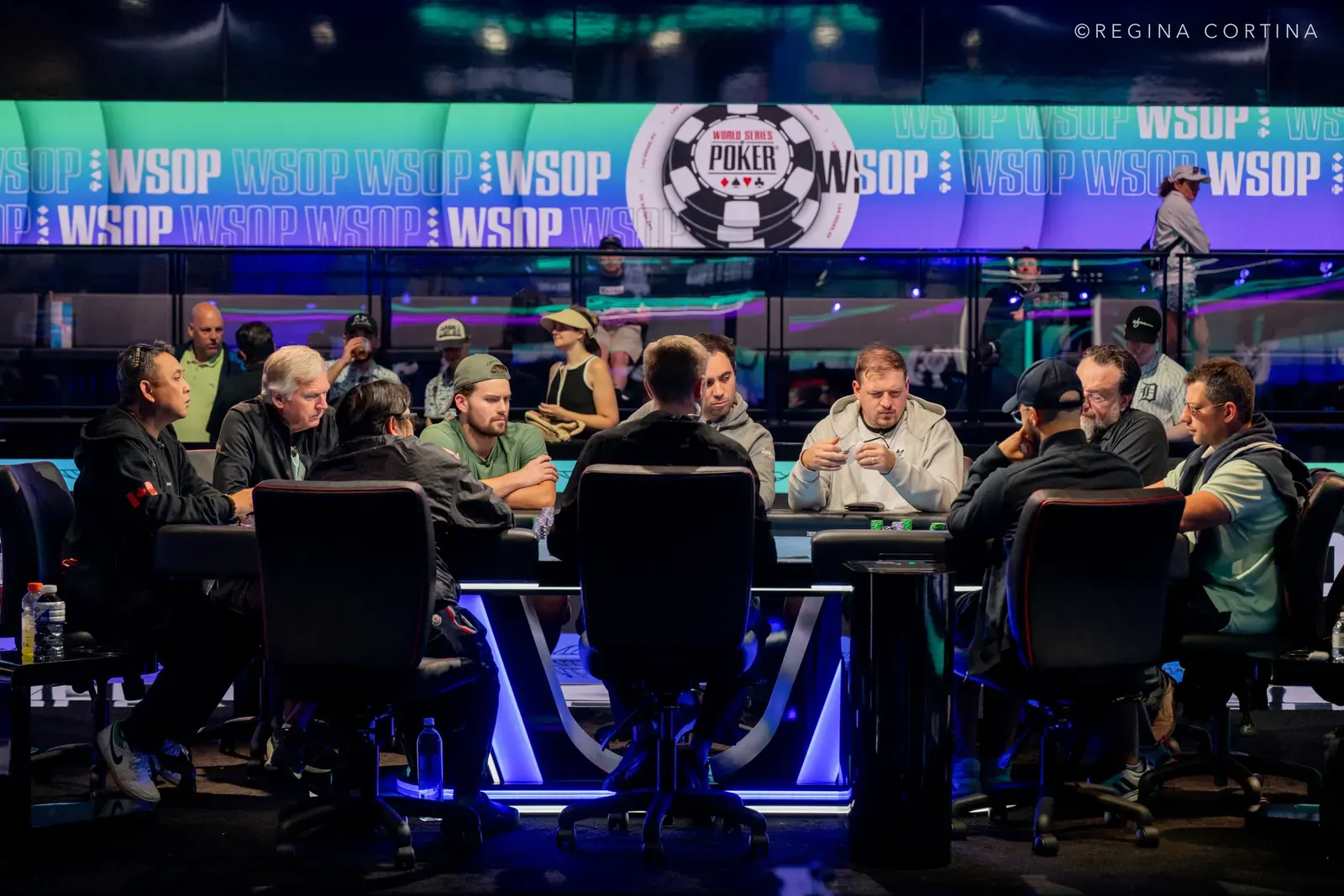
The World Series of Poker (WSOP) Main Event has become the focal point of a heated discussion among poker professionals and enthusiasts following the recent implementation of a shot clock on Day 7. This decision, prompted by instances of prolonged decision-making, known as “tanking,” has divided opinions on how best to balance game integrity, player experience, and spectator engagement.
The controversy intensified after a lengthy tank of over 15 minutes during the Main Event on Saturday, which led the WSOP organizers to introduce a shot clock for the remaining 62 players on Day 7. This move echoes discussions from the previous year, spurred by the notable playing styles of figures like Will Kassouf and Ike Haxton.
Debate on the Shot Clock
The introduction of the shot clock has sparked a significant debate within the poker community, with prominent players like Shaun Deeb and Chris Brewer sharing their perspectives. The core of the discussion revolves around whether the shot clock effectively addresses the issue of excessive tanking without negatively impacting the game’s fairness or its appeal to a broader audience.
While the intention is to prevent significant delays and ensure a smoother tournament progression, concerns have been raised about potential unintended consequences. The balance between maintaining the drama of high-stakes decisions and ensuring efficient gameplay remains a central challenge for the WSOP.
Shot Clock Mechanics
The newly implemented system, announced by Joe Stapleton on the WSOP livestream, gives players 20 seconds to act preflop and 30 seconds on each postflop street. Additionally, players are provided with six 30-second time bank cards to use daily. This structure aims to provide a defined timeframe for decisions while offering some flexibility.
However, some high-stakes players, such as Chris Brewer, argue that the shot clock disproportionately benefits players already familiar with such formats, potentially creating an “unbelievable amount of EV” advantage. This perspective suggests that the shot clock might favor seasoned professionals over recreational players, who constitute a significant portion of the Main Event participants.
Player Perspectives
Shaun Deeb offered a different viewpoint, acknowledging that while the shot clock might favor him due to his familiarity with the format, he considers it a “necessary evil.” Deeb argues that the shot clock is essential to prevent the unfairness that arises from excessive tanking by some players, noting that “pros take way more time than recreationals.” He believes that the shot clock ultimately benefits recreational players by preventing pros from taking extended periods to deliberate on every turn.
Exploring Alternatives
The WSOP faces the challenge of finding a solution that satisfies all stakeholders. Several alternative approaches are being considered:
Ditching the Clock
The simplest solution would be to revert to the system used for the first six days of the Main Event, which had no shot clock. This approach relies on existing mechanisms to address excessive delays, as seen when the floor intervened in a previous incident, impacting a player’s ability to reach a pay jump. However, this risks a return to lengthy tanks, potentially affecting viewer experience, especially for those new to poker.
Dealer Discretion
Another option is to empower dealers with more discretion to intervene when a hand becomes excessively prolonged. This would avoid a blanket shot clock for all players and allow for a more flexible approach. The challenge lies in ensuring consistency, as different dealers might interpret “excessive” differently, potentially leading to perceptions of unfairness. This method, however, could preserve the drama of crucial decisions while providing officials a tool to manage extreme delays.
Player Self-Policing
Encouraging players to enforce the rules themselves through calling the clock is a possibility. However, players are often disincentivized from doing so due to etiquette concerns or the potential benefits of slow play, such as waiting for a pay jump. While players can call the clock on any opponent, the stigma associated with this action often prevents its widespread use.
A Chess-Style Clock
A more radical approach involves adopting a chess-style clock, a system already being tested in high-level poker events like the Triton Poker Series. In this model, each player receives a personal time bank for the entire day, allowing them to manage their time strategically. This system aims to eliminate the need to police individual tanks, as players can use their allotted time for critical decisions. Pros like Daniel Negreanu and Phil Hellmuth have expressed support for this innovative approach.
Key Facts
| Aspect | Details |
|—|—|
| Event | World Series of Poker (WSOP) Main Event |
| Issue | Excessive player “tanking” (prolonged decision-making) |
| WSOP Action | Introduction of a shot clock on Day 7 |
| Shot Clock Details | 20-second preflop, 30-second postflop, 6 time bank cards per player |
| Player Debate | Concerns about fairness, EV impact, and game flow |
| Alternative Solutions | No clock, dealer discretion, player self-policing, chess-style clock |
The debate over the shot clock at the WSOP Main Event highlights the ongoing challenge of optimizing poker tournaments for both competitive integrity and entertainment value. As the tournament progresses, the effectiveness and fairness of the implemented measures will continue to be scrutinized by players and fans alike.
Source: PokerNews – Most Agree Tanking Is an Issue, But What Should the WSOP Do About It? https://www.pokernews.com/news/2026/07/wsop-main-event-tanking-shot-clock-options-debate-51858.htm
Datos clave
| Punto | Detalle |
|---|---|
| Fuente | PokerNews |
| Fecha | 2026-07-13T02:45:00+00:00 |
| Tema | Most Agree Tanking Is an Issue, But What Should the WSOP Do About It? |
Fuente
PokerNews Publicacion original: 2026-07-13T02:45:00+00:00
Related stories
Hall of Famer Jason Koon Steps Back from Triton Pursuit to Focus on Family
Newly inducted Poker Hall of Famer Jason Koon tells Card Player he is trimming his tournament schedule further, even as rivals close…
Read more
MLB Star Ronald Acuna Jr. Signs Prediction Market Deal, Raising Questions for Video Poker Operators
Atlanta Braves' Ronald Acuna Jr. becomes the first MLB player to endorse prediction market Kalshi. The deal highlights a growing regulatory gray…
Read more
Meta Partners With Paf to Fight Unlicensed Gambling Ads, Starting in Switzerland
Paf will share licensing data with Meta to help remove ads from unlicensed gambling operators. The pilot begins in Switzerland and could…
Read more
Nobel Literature Betting Odds Draw Interest From Video Poker Players Who Follow Prop Markets
Betsson releases 2026 Nobel Prize in Literature odds with Can Xue as favorite. The prop-betting market offers a crossover angle for video…
Read more