
Live Tournament Strategy Adjustments: Rethinking Play Against 3x Opens
New GTO Wizard data reveals significant preflop adjustments are needed when facing 3x open raises in live poker tournaments, particularly for players in the blinds.
A recent analysis leveraging GTO Wizard's cutting-edge multiway preflop AI solver has unveiled critical strategic shifts necessary for success in live poker tournaments, especially when confronted with 3x open raises. The comprehensive data, meticulously collected across various stack depths, suggests that many live poker enthusiasts are defending too broadly against these larger open sizes, potentially leading to significant financial setbacks. The findings unequivocally highlight the imperative for players to substantially tighten their preflop ranges, a directive that holds particular weight for those seated in the blinds.
The Big Blind's Predicament
Among the most salient discoveries from the GTO Wizard data is the recommended response for the big blind when facing an under-the-gun (UTG) 3x open. At a 100 big blind effective stack depth, the solver advocated for folding a remarkable 72.6% of hands. This figure presents a stark contrast to the strategy employed against a more conventional online open size of 2.1x, where the fold percentage drops dramatically to 37.3%. The fundamental reason for this substantial adjustment lies in the concept of pot odds; a larger open size inherently diminishes the immediate price to call, rendering many marginal hands unprofitable to continue with, particularly when playing out of position postflop. This principle consistently holds true across all tested stack depths, demonstrating that the big blind must invariably fold a significantly wider range of hands against 3x opens compared to their smaller counterparts.
Positional Considerations Remain Key
While players in the blinds are most heavily impacted by these adjustments, other positions also necessitate strategic adaptations. For instance, when facing a 3x open from the cutoff (CO) at 100 big blinds, the big blind was still advised to fold 46.9% of hands. This represents a considerable increase from the 22.7% fold rate recommended against a 2.1x open in the same scenario. The narrower gap in fold percentages, when compared to UTG opens, can be attributed to the fact that the cutoff typically opens a wider range of hands, thereby allowing the big blind to defend with a broader spectrum of hands that retain sufficient equity. Nevertheless, the solver consistently championed tighter play against larger open sizes, irrespective of the raiser's position at the table.
Even the button, a position traditionally known for its postflop advantages, is not exempt from these adjustments. Against a 100bb UTG 3x open, the button's recommended fold rate soared to 82.7%, a notable increase from the 75.2% against a 2.1x open. This finding underscores a significant tightening of ranges even for players who typically exploit their late position to play a wider array of hands.
Shorter Stacks Demand Aggression
As stack depths diminish, the optimal strategy undergoes a shift towards more aggressive play, especially in preflop scenarios. At 50 big blinds, the solver indicated a preference for smaller three-bet sizings compared to deeper stack play. When stack depths reached 25 big blinds, flat-calling became markedly less frequent across numerous situations. For example, when confronted with a 3x UTG open from the small blind, the solver unequivocally recommended a pure three-bet or fold strategy. The inherent difficulty of realizing equity from an out-of-position standpoint, compounded by the ever-present risk of a squeeze play from the big blind, renders flat-calling an unattractive proposition. Similarly, the button largely moved away from flatting at shallower depths, with the solver favoring either an immediate fold or aggressive preflop actions due to the rapidly reduced stack-to-pot ratio. In certain specific scenarios, such as facing a 3x CO open at 50bb from the small blind, the solver even introduced all-in shoves, recognizing that the augmented dead money in the pot rendered such aggressive moves significantly more profitable.
The overarching conclusion drawn from this extensive data analysis is unequivocal: live tournament players frequently defend against 3x opens as though they were encountering standard online sizings, a strategic misstep that can be highly detrimental. The GTO Wizard analysis strongly indicates a pressing need for substantially tighter preflop ranges when facing these larger open raises, particularly from the blinds. The inherent challenges in realizing equity from an out-of-position perspective and the less favorable pot odds necessitate a far more selective and disciplined approach to hand selection.
Key Adjustments for Live Players
- Big Blind vs. UTG (100bb): Fold 72.6% of hands due to unfavorable pot odds and out-of-position play. | Fold 37.3% of hands, allowing for wider defense given better pot odds.
- Big Blind vs. CO (100bb): Fold 46.9% of hands, tighter than online but wider than vs. UTG due to CO's broader range. | Fold 22.7% of hands, defending a much wider range against a CO open.
- Button vs. UTG (100bb): Fold 82.7% of hands, showing significant tightening even for a positional advantage. | Fold 75.2% of hands, still tight but less so than against larger opens.
- Shallow Stacks (25bb SB vs. UTG): Pure three-bet or fold strategy; flat-calling is largely eliminated. | More room for flat-calling and varied strategies due to better stack-to-pot ratios.
This in-depth analysis holds particular relevance for PlayVideoPoker.org readers who regularly participate in live poker tournaments. A thorough understanding of these crucial preflop adjustments can pave the way for more profitable play by enabling players to circumvent common strategic errors and optimize their approach against diverse opponent tendencies and varying bet sizings. By discerning when to adopt a more conservative stance and when to deploy aggressive tactics, players can secure a significant competitive advantage at the felt.
Source: PokerNews – How to Adjust Against 3x Opens in Live Poker Tournaments – https://www.pokernews.com/strategy/how-to-adjust-against-3x-opens-in-live-poker-tournaments-51314.htm
Fuente
PokerNews Publicacion original: 2026-05-24T08:00:00+00:00
Related stories

NPS Pixbet Recife Crowns Four Champions, Including Pedro Henrique Mendes and Daniel Peueua
The NPS Pixbet Recife poker series concluded its penultimate day with four champions crowned across various events, highlighting victories for Pedro Henrique…
Read more
Jeferson Cleitiano Leads Day 1 Qualifying for NPS Pixbet Recife Main Event
Jeferson Cleitiano, the 2024 champion, is aiming for a repeat victory at the NPS Pixbet Recife Main Event, topping the chip counts…
Read more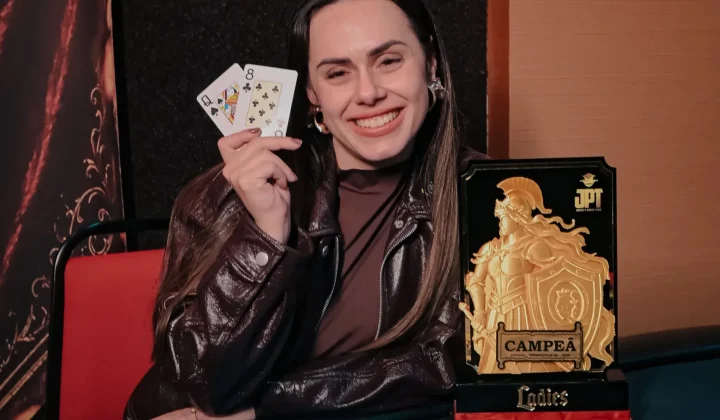
Raysa Santos Secures Second JPT Ladies Title
Raysa Santos has claimed her second JPT Ladies title, overcoming a field of 19 players and expressing her deep connection to the…
Read more
Danny Tang Wins Triton Montenegro Main Event, Takes Home $3.5 Million
Danny Tang secures his sixth Triton Poker title, triumphing in the $100k NLH Main Event at the Triton Super High Roller Series…
Read more