
Padilha Leads BSOP Winter 2-Day High Roller; Hand Analysis Highlights Coolers and Big Stacks
Pedro Padilha holds a commanding chip lead after Day 1 of the BSOP Winter 2-Day High Roller. Hand analysis from the event reveals key strategy lessons on coolers, preflop decisions, and stack management.
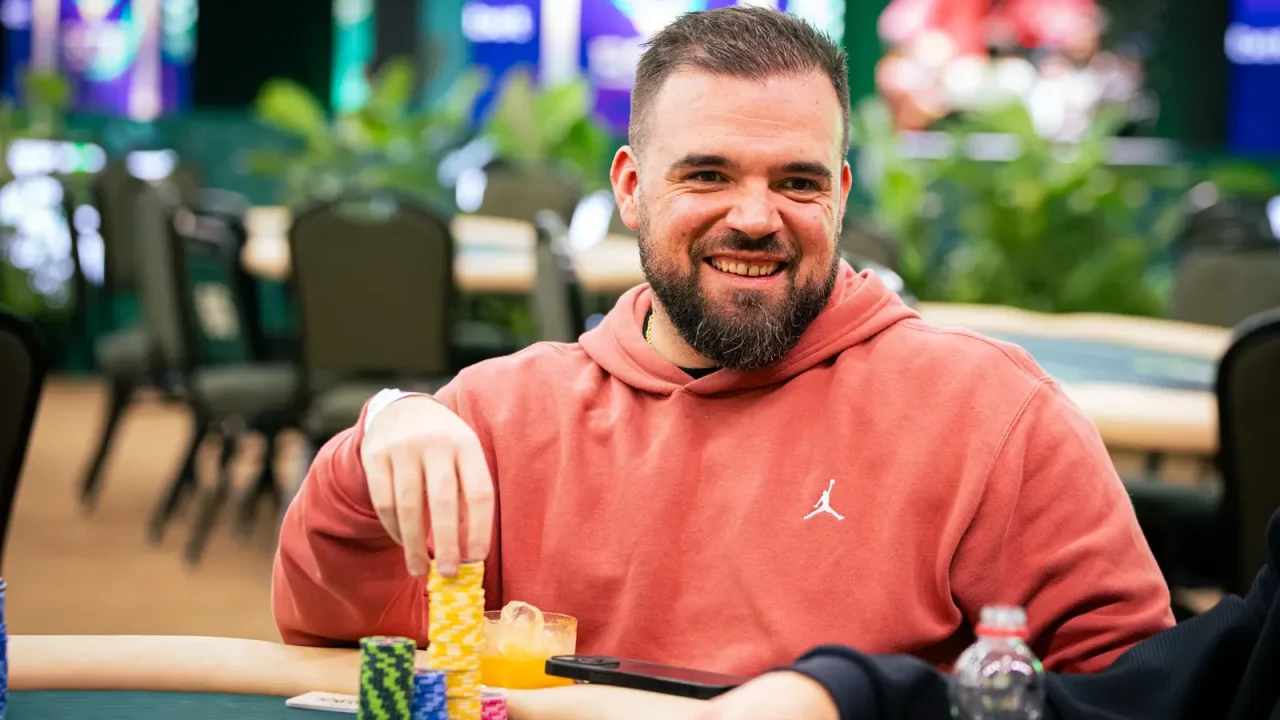
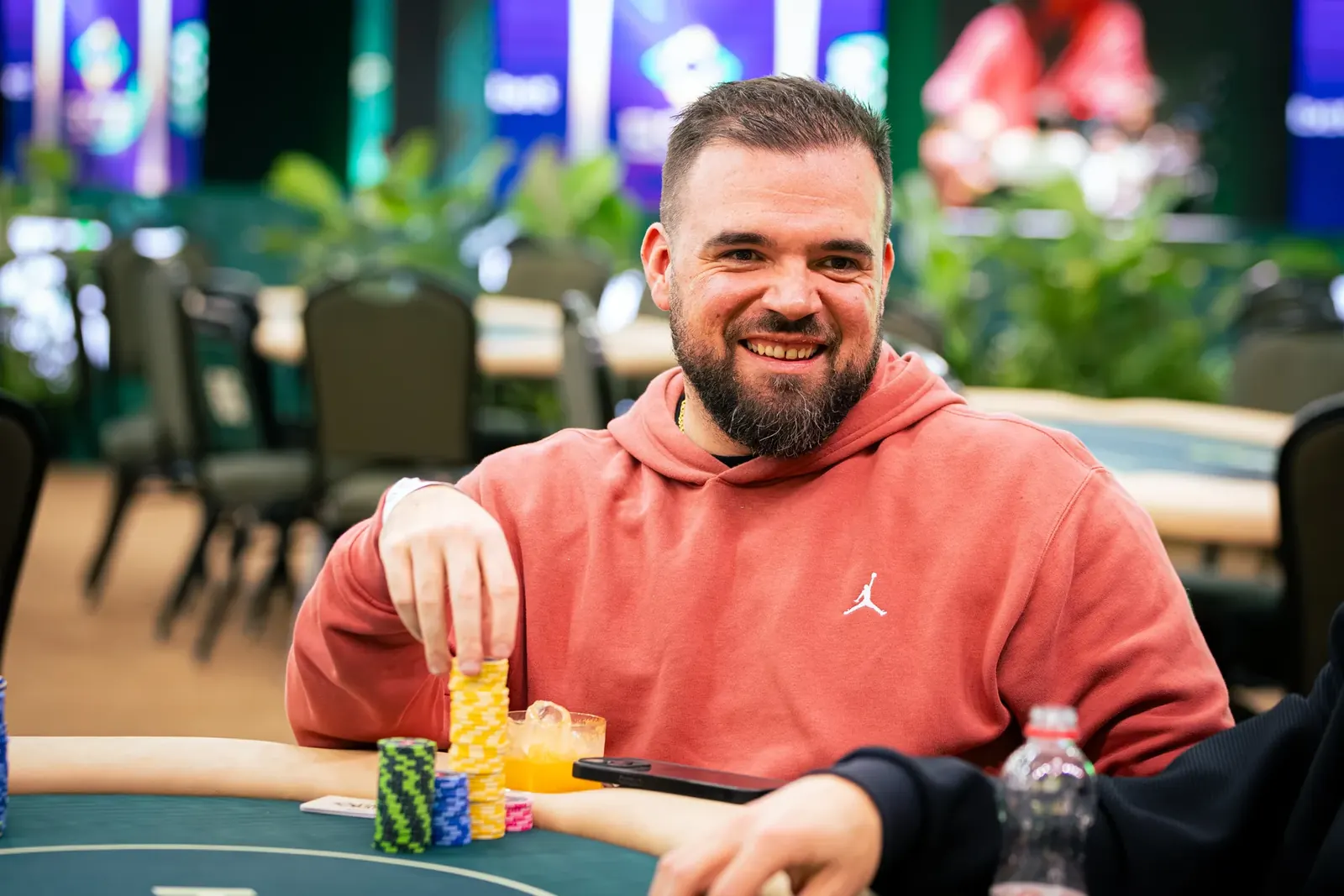
The BSOP Winter 2026 series reached its final day with the 2-Day High Roller drawing 73 entries. Pedro Padilha emerged as the chip leader after Day 1, stacking 626,000 chips against a field of top Brazilian players. The tournament, which carries a buy-in of R$ 15,000, is scheduled to resume on Thursday, July 30, with blinds at 3,000/6,000 and a big blind ante. Registration remains open until 15:15 local time, and the final prize pool has not yet been disclosed.
Key facts
| Detail | Information |
|---|---|
| Event | BSOP Winter 2026 – 2-Day High Roller |
| Entries | 73 total |
| Chip leader | Pedro Padilha – 626,000 chips |
| Second place | Paulo Joanello – 458,000 chips |
| Third place | Diego Sorgatto – 429,000 chips |
| Buy-in | R$ 15,000 |
| Resumption | Thursday, July 30, 14:00 local time, blinds 3,000/6,000 |
The chip leader’s advantage
Padilha’s stack of 626,000 puts him well ahead of second-place Paulo Joanello (458,000) and third-place Diego Sorgatto (429,000). Other notable names in the chip count include Moacir Caetano (333,000), Murilo Fidelis (332,000), Léo Rizzo (292,000), and Pedro Safar (274,000). Padilha’s lead is significant, but with blinds increasing and the tournament still open for late registration, the field could shift quickly. For strategy-minded readers, this illustrates the importance of accumulating chips early to apply pressure on shorter stacks, especially in high-roller events where the skill level is high and edges are small.
Por que importa
Cooler at the final table: QQ vs. AA
A hand from the BSOP Championship final table, which ran concurrently, provides a clear example of a high-stakes cooler. With eight players left and blinds at 25,000/50,000, Vinicius Gonçalves opened from UTG with pocket queens. Alisson Piekazewicz, holding aces in the hijack, three-bet to 400,000. Gonçalves moved all in, and Piekazewicz called. The aces held, and Gonçalves was eliminated in eighth place, collecting R$ 130,000. Piekazewicz’s stack grew to 215 big blinds, giving him a commanding lead.
This hand is a classic example of how deep-stacked play can lead to massive pots when premium hands collide. For players studying tournament strategy, the takeaway is the importance of range considerations: when a player opens from UTG and then rejams over a three-bet, the rejam range is usually very strong. Piekazewicz’s call with aces was automatic, but for the player with queens, the situation is a disaster – almost no fold equity against a tighter range.
Contexto
Nehme completes a straight on the turn
In the Mini Championship, Matheus Nehme and Olívio Gontijo played a sizable pot with blinds at 25,000/50,000. Gontijo opened with a pair of kings, and Nehme defended his big blind with 8-7 offsuit. The flop came 3-5-6, giving Nehme an open-ended straight draw. Gontijo bet 150,000, and Nehme called. The turn brought a 4, completing Nehme’s straight. Gontijo bet 450,000, and Nehme raised to 1,000,000. Gontijo called. The river was a 9, and Nehme moved all in for 665,000. Gontijo, after using several time banks, called and saw the straight.
This hand emphasizes the value of drawing hands from the blinds, especially when stacks are deep and the opponent is likely to pay off. Nehme’s decision to call the flop bet with a gutshot plus straight draw (the 7-8 hand gave him a double-gutter) was correct given the pot odds and implied odds. The turn raise was aggressive but effective, setting up a river shove that Gontijo could not escape.
Alfredo Ferreira’s snap fold with queens
Another hand from the Mini Championship showcased a disciplined fold. Alfredo Ferreira held queens on the button. After a raise and a three-bet, he made a small click-raise to 180,000. The big blind then five-bet to 400,000. The floor was called to correct a sizing issue, and before the correction, Ferreira snap-folded his queens. The hand eventually revealed that he would have been in a four-way all-in pot where his queens were trailing multiple opponents. Ferreira’s fold preserved his stack and avoided a potential disaster.
This hand is a masterclass in reading the table and recognizing when a hand is likely dominated. Ferreira’s instinct to fold quickly, even with a premium hand, saved him from a situation where his equity was poor. It’s a reminder that in multi-way pots with heavy action, even queens can be a trap.
Why this matters for poker players
The BSOP Winter series provides a rich dataset of hand histories that can be studied for strategy improvement. The hands from this event illustrate common high-stakes scenarios: cooler avoidance, drawing-hand play, and disciplined folding. For players who focus on tournament poker, reviewing these situations can sharpen decision-making, especially in deep-stacked play where stack-to-pot ratios change rapidly.
Source: Mundo Poker, “BSOP: Pedro Padilha avança com larga vantagem no 2-Day High Roller na finalização do Winter; confira o chip count” – https://mundopoker.com.br/noticias/bsop/bsop-pedro-padilha-avanca-com-larga-vantagem-no-2-day-high-roller-na-finalizacao-do-winter-confira-o-chip-count/
Fuente
Mundo Poker Publicacion original: 2026-07-30T05:09:29+00:00
Related stories

MLB Star Ronald Acuna Jr. Signs Prediction Market Deal, Raising Questions for Video Poker Operators
Atlanta Braves' Ronald Acuna Jr. becomes the first MLB player to endorse prediction market Kalshi. The deal highlights a growing regulatory gray…
Read more
Meta Partners With Paf to Fight Unlicensed Gambling Ads, Starting in Switzerland
Paf will share licensing data with Meta to help remove ads from unlicensed gambling operators. The pilot begins in Switzerland and could…
Read more
Nobel Literature Betting Odds Draw Interest From Video Poker Players Who Follow Prop Markets
Betsson releases 2026 Nobel Prize in Literature odds with Can Xue as favorite. The prop-betting market offers a crossover angle for video…
Read more
Jonas Kronwitter Wins PGT PLO Series, Dominates Omaha Field in Las Vegas
Austrian poker pro Jonas Kronwitter took down the PGT PLO Series at the PokerGO studios in Las Vegas, winning two events and…
Read more