
Common Mistakes When Analyzing Poker Hand Clips
Learn to avoid common pitfalls like results bias and ignoring crucial context when watching and analyzing poker hand video clips. Improve your game by focusing on strategic decisions, not just outcomes.
Watching poker hand clips can be an incredibly valuable tool for improving your game. You get to see how pros and even advanced amateurs play various situations, and you can learn from their decisions. However, it’s easy to fall into traps that hinder true learning. Many viewers make common mistakes when reacting to poker hand clips, often leading to misinterpretations and missed opportunities for strategic growth.
This article will break down the most frequent errors and teach you how to analyze poker hand videos more effectively, focusing on the decision-making process rather than just the outcome.
The Pitfall of Results Bias
One of the most pervasive errors is results bias. This occurs when you judge the quality of a decision based solely on its outcome. If a player makes a risky call that happens to pay off, it’s often praised as a “great play,” even if it was mathematically unsound. Conversely, a perfectly executed, high-EV (Expected Value) play that loses due to bad luck might be labeled a “bad beat” or a “terrible decision.”
To overcome results bias, train yourself to evaluate the decision *before* the river card is dealt. Ask yourself:
* What was the player’s range?
* What was the opponent’s likely range?
* What were the pot odds?
* What was the implied odds?
* What was the player’s perceived image?
Focus on whether the decision was +EV given the information available at the time, not whether it resulted in a win or loss.
Missing Stack Depth Information
Stack depth is one of the most critical pieces of information in poker, yet it’s frequently overlooked in quick hand clips. A play that’s perfectly acceptable when both players have 100 big blinds (BBs) might be a huge mistake when they have 20 BBs. Short stack play involves different strategy considerations, such as push/fold ranges and the diminished value of implied odds.
When watching a clip, always try to ascertain the effective stack sizes. If it’s not clearly visible, make an educated guess or acknowledge that this crucial piece of information is missing. Without understanding stack depth, you cannot properly evaluate the risk-reward ratio of any given action.
Ignoring Player Position
Position is power in poker. Playing from early position is vastly different from playing on the button or in the blinds. A pre-flop raise with a marginal hand might be standard from the button but disastrous from under the gun (UTG). Similarly, calling a bet out of position creates a much more difficult scenario for the rest of the hand than calling in position.
Many viewers forget to consider where the player is seated relative to the dealer button and other active players. Always ask:
* Where is the player in relation to the button?
* Who acted before them, and who has to act after them?
* How does their position influence their range and their opponents’ ranges?
Ignoring position is akin to ignoring gravity in physics – it’s a fundamental force that dictates much of the action.
Judging a Short Clip Without Full Context
Poker hands rarely exist in a vacuum. A player’s action on one street might be heavily influenced by their actions on previous streets, their table image, or even their history with a specific opponent. A short clip, often designed for dramatic effect, frequently strips away this vital context.
For example, a big bluff on the river might seem reckless in isolation, but if the player had been playing very tight for hours, it could be a well-timed move to exploit their table image. Conversely, a seemingly conservative fold might be an excellent read if the opponent has just shown aggression for the first time in an hour.
Whenever possible, try to understand:
* What happened on previous streets?
* What is the player’s general table image?
* Are there any known dynamics between the players involved?
Without this broader context, it’s easy to misinterpret intentions and strategies.
Practical Lessons for Better Video Analysis
To move beyond these common errors, adopt a more analytical approach to video poker hand clips. Here’s a summary of key considerations:
| Mistake | Description | How to Correct |
|---|---|---|
| Results Bias | Judging a decision based solely on its outcome (win/loss). | Evaluate the decision based on available information *before* the outcome. |
| Missing Stack Depth | Not considering the amount of chips players have relative to blinds. | Always identify effective stack sizes; understand how they influence strategy. |
| Ignoring Position | Overlooking the player’s seat relative to the button and other players. | Determine position; recognize its impact on ranges and decision-making. |
| Lack of Context | Analyzing a short clip in isolation without prior actions or table dynamics. | Look for previous actions, table image, and player history if available. |
By consciously applying these analytical filters, you’ll transform your poker video analysis from passive viewing into an active learning experience. You’ll not only identify what players did but *why* they did it, and more importantly, how you can apply similar strategic thinking to your own game. This deeper understanding is crucial for true improvement at the poker tables.
Related stories

Editorial Note: Source Off-Topic for PlayVideoPoker – No Article Produced
The SBC News story on VERSUSbet and Real Madrid in Brazil is a sportsbook marketing announcement. It contains no video poker, poker…
Read more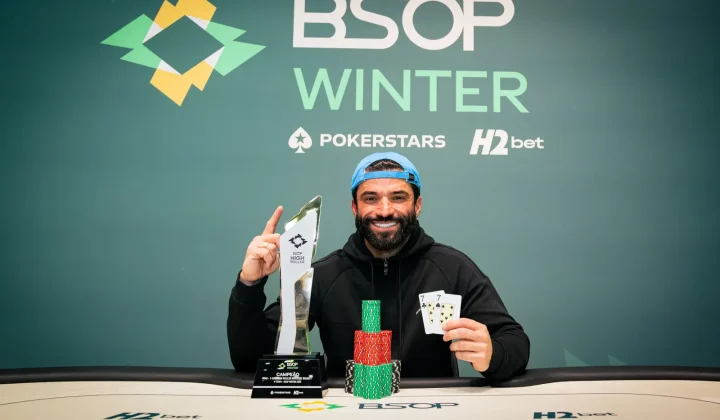
Lucas Scafini Wins BSOP Winter High Roller Mystery Bounty, Details Key Hand
Brazilian player Lucas Scafini took down the R$10,000 buy-in High Roller Mystery Bounty at BSOP Winter, earning R$275,000 and describing a pivotal…
Read more
Evoplay Launches Tiger of Fortune Slot With Stackable Bonus Boosters
Evoplay has released Tiger of Fortune, a video slot with three combinable bonus boosters, a Grand Jackpot and a Bonus Buy feature.…
Read more
South Korean Gambling Ring Exploited Hearing-Impaired Mules in $230M Scheme
A Busan police investigation uncovered a $230 million illegal gambling operation that used people with hearing impairments as bank-account mules. The ring…
Read more