
The Missing Pieces: Why Video Poker Advice Often Falls Short on Psychology and Bankroll
Many video poker strategy guides focus solely on optimal plays, neglecting the crucial roles of bankroll management and player psychology. This column explores why these omissions can weaken even the most mathematically sound advice.
Video poker is a game of skill, math, and decisions. Many excellent resources exist that meticulously break down optimal strategy for various game variants, advising players on the statistically best move for every possible hand. This advice is invaluable, forming the bedrock of successful play. However, even the most perfect strategy chart can fall short if it ignores two critical, often overlooked components: bankroll pressure and session psychology.
The analytical, opinionated, but fair truth is that while the math of video poker is absolute, the human element that executes that math is anything but.
The Cold, Hard Math vs. The Hot, Anxious Player
Optimal video poker strategy aims to maximize the expected return over an infinite number of hands. This is a purely mathematical concept. In reality, players operate within finite sessions, with finite bankrolls, and under varying emotional states.
Consider a player with a limited bankroll. A mathematically optimal play might involve holding two cards to a royal flush, yielding a higher expected return than holding a guaranteed small pair, but at a much higher variance. If losing that hand means the player’s session is over, the “optimal” play in a purely mathematical sense might be disastrous for their practical enjoyment and longevity at the machine. This isn’t to say optimal strategy is wrong, but rather that its application requires contextual understanding.
Bankroll Management: The Unsung Hero
Bankroll management isn’t just about how much money you have; it’s about how you manage that money relative to your playing style, risk tolerance, and the volatility of the game you’re playing. A strategy guide that doesn’t account for bankroll size implicitly assumes an infinite bankroll, which is a luxury few players possess.
For instance, a beginner player with a small bankroll might be better served by a slightly suboptimal strategy that reduces variance, even if it shaves a fraction of a percent off the theoretical return. The goal for them might be to extend playtime and enjoy the game, rather than chase the absolute highest possible theoretical return in a single session.
Here’s a simplified look at how bankroll influences “optimal” play:
| Player Profile | Bankroll Size | Primary Goal | Strategy Implication |
|---|---|---|---|
| Recreational Player | Small | Extended Playtime, Entertainment | May favor lower variance hands, even if slightly suboptimal. |
| Serious Player | Medium | Maximize Return, Manage Swings | Follows optimal strategy with awareness of volatility. |
| High Roller | Large | Maximize Return, Comp Eligibility | Strictly optimal, high variance plays are acceptable. |
| Budget-Conscious Player | Very Small | Preserve Funds, Experience Game | Focus on very low variance games, even if payout is slightly lower. |
Session Psychology: The Invisible Opponent
Beyond bankroll, the mental state of a player profoundly impacts their ability to execute strategy. Frustration from a losing streak, excitement from a big win, fatigue, and even external stressors can lead to deviations from optimal play.
A player on tilt might chase a flush draw with insufficient outs, or break up a winning hand in pursuit of a long-shot jackpot. These psychological pressures are real and can negate hours of strategy study. Good advice should acknowledge this, perhaps suggesting breaks, setting loss limits, or simply being aware of one’s own emotional state. This is where holistic video poker advice truly shines.
What’s Missing from Most Video Poker Advice?
Most advice focuses on the “what to do.” What often gets left out is the “when to stop,” the “how to manage expectations,” and the “how to react to adverse outcomes.” These are the elements that bridge the gap between theoretical perfection and practical play.
Many guides assume a robot-like execution of strategy, ignoring the very human tendencies to get greedy, fearful, or impatient. Comprehensive video poker advice would integrate psychological resilience training alongside strategic drills.
The Impact of Variance on Player Psychology
Variance, the natural fluctuation of results around an expected average, plays a significant role in a player’s psychological state. Even with optimal play, short-term results can be wildly unpredictable. A string of bad beats can quickly erode confidence and lead to emotional decisions. Understanding variance, and accepting it as an inherent part of the game, is crucial. This acceptance helps players maintain composure and stick to their chosen strategy, rather than panicking or chasing losses.
Responsible Play and Practical Checks
Understanding the limitations of pure mathematical strategy is crucial for responsible gaming. It empowers players to make informed choices that align with their personal goals and financial limits, rather than blindly following a strategy that might be unsuitable for their situation.
Practical checks on your own play include:
* Self-assessment: How do you feel during a losing streak? Do you become reckless?
* Bankroll tracking: Are you sticking to your predetermined budget?
* Time limits: Are you playing longer than intended, potentially leading to fatigue-induced errors?
* Emotional state: Are you playing when stressed, angry, or overly excited? These states often lead to suboptimal decisions.
Integrating these psychological and bankroll considerations into your video poker advice and personal strategy is not just about playing better; it’s about playing smarter and more responsibly.
Conclusion: A Holistic Approach to Video Poker
The analytical conclusion is that while knowing the optimal mathematical strategy for video poker is non-negotiable for serious players, it’s only one part of the equation. Integrating robust bankroll management and a keen awareness of session psychology completes the picture, transforming theoretical knowledge into practical, sustainable, and enjoyable play. Ignoring these aspects means that even the most well-intentioned video poker advice can be, at best, incomplete, and at worst, detrimental to a player’s long-term success and enjoyment.
Related stories

Jonas Hareide Leads NPS Pixbet Fortaleza High Roller Final Table With Half the Chips in Play
Swedish player Jonas Hareide enters the NPS Pixbet Fortaleza High Roller final table with a commanding chip lead, holding nearly half the…
Read more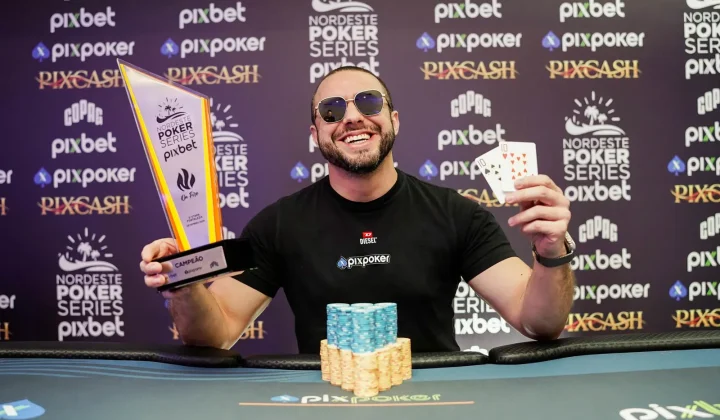
Ramon Pessoa Wins NPS Pixbet Fortaleza On Fire Title After Last-Minute Trip
The two-time Northeast champion and PixPoker ambassador drove from Ubajara to Fortaleza on a whim, defeated a field of 165 entries, and…
Read more
UK Crypto Rules Set Application Date, But Impact on Video Poker Payments Remains Unclear
The FCA will open applications for crypto asset authorization on September 30, 2026, with the new regime taking effect in October 2027.…
Read more
OpenBet’s OmniLogic Acquisition Signals Broader Lottery-Sportsbook Convergence
OpenBet’s planned purchase of OmniLogic, a lottery sportsbook specialist, points to a growing trend of lottery and sportsbook platform integration. While the…
Read more