
Nevada Representative Calls for CFTC to Focus on Agriculture, Not Sports Betting
U.S. Representative Dina Titus advocates for federal agencies to regulate traditional markets rather than encroaching on sports betting, emphasizing the need for state-level oversight and consumer protections.
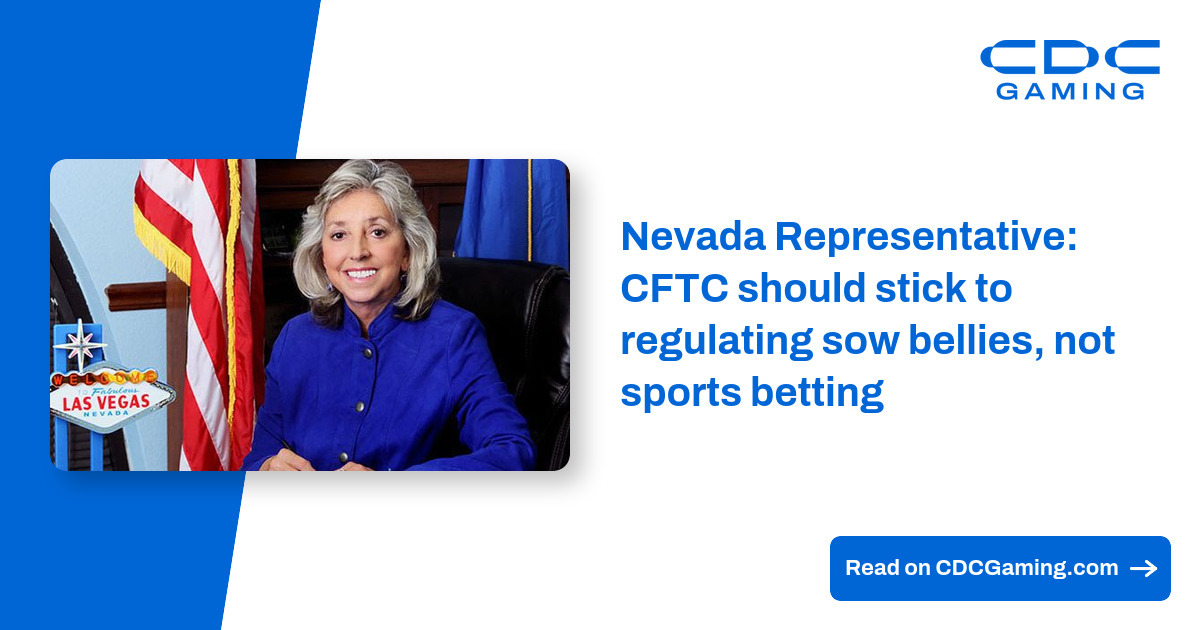
Nevada Representative Dina Titus, co-chair of the Congressional Gaming Caucus, has strongly voiced her opposition to the Commodity Futures Trading Commission’s (CFTC) involvement in regulating sports betting and prediction markets. Speaking at the 19th Conference on Gambling & Risk Taking in Las Vegas, Titus asserted that the federal agency should concentrate on its traditional purview, such as agricultural commodities, rather than delving into the complexities of the gaming industry.
Titus reiterated her call for federal legislation to curb the influence of prediction markets, arguing that these platforms operate outside the established regulatory frameworks put in place by states and tribal operators. She highlighted the disparity between state-regulated sports betting, which includes licensing, anti-money laundering protocols, age verification, and responsible gaming measures, and prediction markets that she claims bypass these essential protections.
The Future of Gaming Regulation
Titus emphasized that the gaming industry can no longer afford to remain passive regarding federal intervention. The landscape has shifted significantly since the U.S. Supreme Court’s 2018 decision that overturned the Professional and Amateur Sports Protection Act (PASPA), enabling sports betting to expand across numerous states. She contends that prediction markets, which have proliferated rapidly, have not received authorization from Congress or the courts to operate in this manner.
“These new efforts to get around all that don’t call for those types of protections,” Titus stated. “They call themselves sports events contacts, but if it walks like a duck and talks like a duck, it’s sports betting.”
The Fair Markets and Sports Integrity Act
In response to the growing presence of prediction markets like Kalshi and Polymarket, Titus has introduced the Fair Markets and Sports Integrity Act. This proposed legislation aims to prevent these platforms from offering financial contracts tied to sports and casino game outcomes without obtaining the necessary state licenses. Titus clarified that her intention is not to stifle innovation or competition but to ensure a level playing field where all operators adhere to jurisdictional rules, whether set by states or tribes.
Questioning the CFTC’s Authority
Titus directly challenged the CFTC’s authority and capacity to regulate gaming. She pointed out that the agency itself has stated it is not a gaming regulator and questioned its resources and expertise in this domain. She expressed concern over the CFTC’s aggressive stance in filing lawsuits against states on behalf of prediction markets, noting the perceived closeness between the agency and individuals associated with these companies.
“How that works out in the courts and with legislation is yet to be determined,” Titus remarked. “A lot of people are jumping on that bandwagon.”
Broader Legislative Initiatives
Beyond the specific issue of prediction markets, Titus also touched upon other legislative efforts relevant to the gaming industry. She mentioned a bill aimed at preventing members of Congress from profiting from insider trading and highlighted the importance of sports betting integrity monitoring, which she believes is ineffective in unregulated environments.
Other gambling-industry legislation making its way through Congress includes the Fair Bet Act, which seeks to restore the full deduction of gambling losses, currently capped at 90%. Additionally, there is a push to raise the slot tax threshold to $5,000, indexed to inflation, a change Titus believes is long overdue. She also advocated for the repeal of the 0.25% excise tax on sports wagering, questioning its significance to the Treasury Department and suggesting the revenue could be returned to the jurisdictions that generated it.
Nevada’s Role as a Regulatory Standard
Titus concluded by highlighting Nevada’s position as a benchmark for gaming regulation. She stressed the importance of public confidence, ensuring fair games, accountable operators, protected consumers, and preserved competitive integrity. She affirmed the value of conferences like the one she was attending, recognizing their critical role in informing policy and maintaining industry standards as technology and gaming continue to evolve.
Datos clave
| Aspecto | Detalle |
|—|—|
| Ponente | Representante Dina Titus (D-Nevada) |
| Tema principal | Regulación de mercados de predicción y apuestas deportivas |
| Propuesta legislativa | Fair Markets and Sports Integrity Act |
| Crítica | Autoridad y experiencia de la CFTC en regulación de juegos |
| Contexto | 19ª Conferencia sobre Juego y Toma de Riesgos, Las Vegas |
This development matters for PlayVideoPoker readers as it highlights ongoing debates and legislative actions concerning the regulation of sports betting and related markets in the U.S. Understanding these regulatory shifts is crucial for players and industry observers as they can impact the availability, integrity, and future of various forms of legalized gambling.
Fuente: CDC Gaming Reports https://cdcgaming.com/nevada-representative-cftc-should-stick-to-regulating-sow-bellies-not-sports-betting/
Datos clave
| Punto | Detalle |
|---|---|
| Fuente | CDC Gaming Reports |
| Fecha | 2026-05-27T00:37:50+00:00 |
| Tema | Nevada representative: CFTC should stick to regulating sow bellies, not sports betting |
Fuente
CDC Gaming Reports Publicacion original: 2026-05-27T00:37:50+00:00
Related stories

Carrot Top Hospitalized After Reported Suicide Attempt, Las Vegas Shows Canceled
The Luxor headliner was rushed to a Las Vegas hospital on Sept. 18 after what TMZ reported as a suicide attempt. His…
Read more
Jonas Hareide Leads NPS Pixbet Fortaleza High Roller Final Table With Half the Chips in Play
Swedish player Jonas Hareide enters the NPS Pixbet Fortaleza High Roller final table with a commanding chip lead, holding nearly half the…
Read more
Ramon Pessoa Wins NPS Pixbet Fortaleza On Fire Title After Last-Minute Trip
The two-time Northeast champion and PixPoker ambassador drove from Ubajara to Fortaleza on a whim, defeated a field of 165 entries, and…
Read more
UK Crypto Rules Set Application Date, But Impact on Video Poker Payments Remains Unclear
The FCA will open applications for crypto asset authorization on September 30, 2026, with the new regime taking effect in October 2027.…
Read more