
Minnesota Leads US with First Prediction Market Ban
Minnesota Governor Tim Walz has signed a bill into law, making Minnesota the first U.S. state to formally outlaw prediction markets. This decision sets a new precedent amidst ongoing disputes between state regulators and the federal Commodity Futures Trading Commission (CFTC).
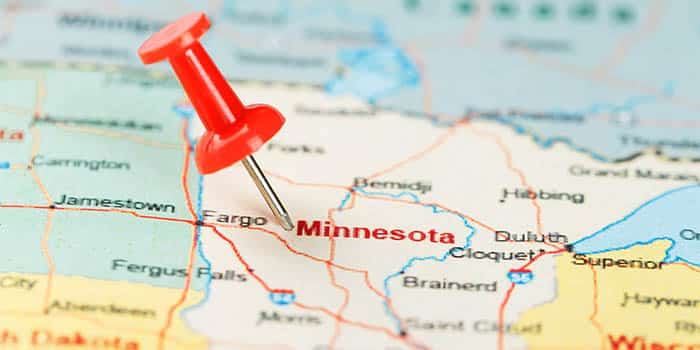
In a landmark legislative move, Minnesota Governor Tim Walz has officially signed a bill into law that outlaws prediction markets, positioning Minnesota as the first state in the United States to implement such a comprehensive ban. This action follows a strong majority vote by state lawmakers last week and arrives amid escalating tensions between state regulators, attorneys general, and the federal Commodity Futures Trading Commission (CFTC).
The new law, which is slated to take effect on August 1, 2026, criminalizes the operation of prediction markets within Minnesota’s borders. This decision by Gov. Walz establishes a significant precedent, moving beyond the cease-and-desist letters typically issued by other states to explicitly prohibit these markets.
State vs. Federal Authority Intensifies
The signing of this bill intensifies the existing head-to-head between state and federal authorities over the regulation of prediction markets. The CFTC has consistently challenged the assertion by state gaming overseers and elected officials that they can preempt federal regulation in this domain. While many states have sought to block prediction markets through administrative means, Minnesota’s outright ban marks a more aggressive stance, according to reporting by GamblingNews.
Minnesota Representative Emma Greenman, a key sponsor of the bill, emphasized the state’s right to determine its own gambling regulations. “We as a state should decide how best and what regulations we think should attach to gambling, to protect public safety, to protect our kids,” Greenman stated. This highlights the legislative intent to safeguard citizens, particularly minors, from what lawmakers perceive as unregulated gambling activities.
CFTC Launches Counter-Lawsuit
Anticipating Gov. Walz’s decision, the CFTC has already launched a counter-lawsuit aimed at blocking the new law before its effective date. The federal regulator’s official website revealed details of this legal challenge, indicating a swift and decisive response to Minnesota’s legislative action.
Michael S. Selig, Chairman of the CFTC, issued a strong statement regarding the new legislation. He argued that the Minnesota law represents “the most aggressive move by a state to shut down CFTC-regulated markets and undermine the federal regulatory regime set up by Congress more than 50 years ago.” Selig further contended that the law would effectively turn lawful operators and participants in prediction markets into “felons overnight,” raising concerns about the immediate and severe impact on those involved in these markets.
Key Details of the Minnesota Prediction Market Ban
- State: Minnesota
- Action: First US state to formally ban prediction markets
- Effective Date: August 1, 2026
- Primary Opposition: Commodity Futures Trading Commission (CFTC)
- Legislative Intent: Protect public safety, especially children, from unregulated gambling
Amendment for Agricultural Data
Interestingly, the original bill proposing the ban on prediction markets underwent a crucial amendment. To accommodate the agricultural industry’s reliance on weather data, the final law includes an exception allowing trading on weather-related predictions. This adjustment underscores the practical considerations and economic impacts that sometimes influence legislative processes.
While Minnesota is the first to enact a formal ban, it is not isolated in its skepticism towards prediction markets. Many local gaming regulators across the US have expressed concerns, often categorizing products offered by platforms like Kalshi and Polymarket as “gambling” without the customary regulatory oversight. These regulators argue that such products lack the consumer protections and responsible gambling measures typically associated with regulated gaming.
Prediction Market Platforms’ Stance
In response to these regulatory challenges, prediction market platforms have consistently rejected the “gambling” label. They argue that their offerings are well-established financial products with historical precedents, asserting that they should not be regulated under gaming laws. This fundamental disagreement over classification lies at the heart of the ongoing legal and regulatory battles. The outcome of the CFTC’s lawsuit against Minnesota’s new law will be closely watched, as it could significantly influence how prediction markets are regulated across the nation.
Why This Matters for PlayVideoPoker Readers
This development in Minnesota, while not directly impacting video poker, is highly relevant to our readers because it highlights the ever-evolving and often contentious landscape of gambling regulation in the United States. The legal battle between state authority and federal oversight, as demonstrated by the CFTC’s challenge, sets a precedent for how different forms of “gaming” or “financial products” might be categorized and regulated in the future. Decisions made on prediction markets could influence regulatory approaches to other forms of online and land-based gambling, including video poker. Understanding these broader regulatory shifts is crucial for anyone interested in the future of legal gaming and its implications for players and operators alike.
Source: GamblingNews, https://www.gamblingnews.com/news/minnesota-governor-signs-prediction-market-ban-us-first/
Fuente
GamblingNews Publicacion original: 2026-05-20T06:49:27+00:00
Related stories

Jonas Hareide Leads NPS Pixbet Fortaleza High Roller Final Table With Half the Chips in Play
Swedish player Jonas Hareide enters the NPS Pixbet Fortaleza High Roller final table with a commanding chip lead, holding nearly half the…
Read more
Ramon Pessoa Wins NPS Pixbet Fortaleza On Fire Title After Last-Minute Trip
The two-time Northeast champion and PixPoker ambassador drove from Ubajara to Fortaleza on a whim, defeated a field of 165 entries, and…
Read more
UK Crypto Rules Set Application Date, But Impact on Video Poker Payments Remains Unclear
The FCA will open applications for crypto asset authorization on September 30, 2026, with the new regime taking effect in October 2027.…
Read more
OpenBet’s OmniLogic Acquisition Signals Broader Lottery-Sportsbook Convergence
OpenBet’s planned purchase of OmniLogic, a lottery sportsbook specialist, points to a growing trend of lottery and sportsbook platform integration. While the…
Read more