
MiCA Deadline Passes: What iGaming Operators with Crypto Payment Rails Need to Know Now
The July 1 end of MiCA’s transitional period means gambling operators using crypto payments face new scrutiny of their entire payment chain. Key2Law’s CEO explains why a licence alone is no longer enough.
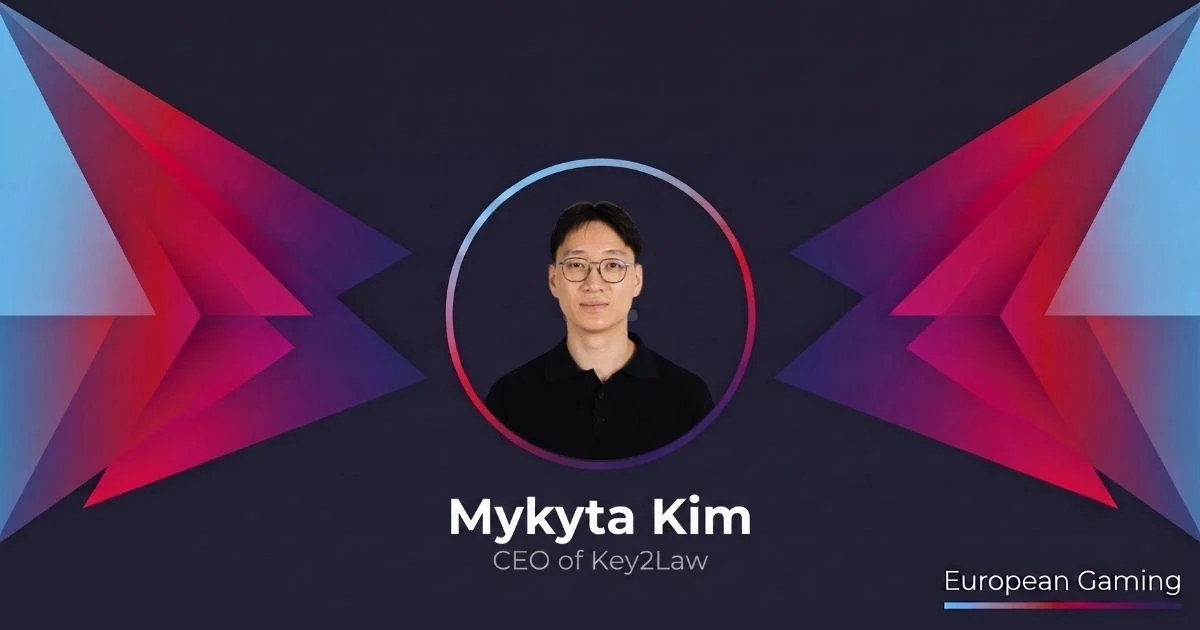
The end of the Markets in Crypto-Assets Regulation (MiCA) transitional period on July 1, 2026, has introduced a new compliance reality for iGaming operators that accept or facilitate crypto payments. According to Mykyta Kim, chief executive officer of Key2Law, crypto payments can no longer be treated as a secondary technical feature sitting outside the main regulatory framework.
In an interview with European Gaming, Kim explained that operators now need to verify whether every partner in their crypto payment chain — including payment processors, custody providers, exchanges and liquidity partners — holds a valid crypto-asset service provider (CASP) authorisation under MiCA. The change affects how regulators, banks, payment providers and auditors assess an operator’s entire business model.
Key facts
| Aspect | Pre-MiCA transition | Post-July 1, 2026 |
|---|---|---|
| Crypto payment treatment | Secondary technical feature | Integral part of regulatory compliance |
| Partner oversight | Reliance on assurances | Required CASP authorisation verification |
| Regulatory scrutiny | Focused on gambling licence | Extended to entire payment chain |
| Compliance approach | Separate workstreams | Integrated framework required |
Why this matters for iGaming operators
The biggest misconception, Kim noted, is that MiCA only concerns crypto exchanges and has nothing to do with iGaming. In practice, if crypto infrastructure is embedded into an operator’s business model — especially for deposits, withdrawals, loyalty programmes or high-risk traffic — MiCA becomes part of the broader compliance risk. It does not replace gambling regulation, but it adds another layer of scrutiny.
Operators should now assume that any key crypto service provider carrying out regulated activities in the EU is expected to comply with the current regulatory framework. Kim advised against delaying action in the hope that the situation will resolve itself.
What to do if a partner lacks CASP authorisation
If a payment, exchange, custody or liquidity provider has not obtained CASP authorisation, Kim recommends an immediate legal and operational risk assessment. Operators must understand exactly which services the provider performs and whether those services fall within the scope of MiCA’s regulated activities.
While terminating the relationship is not always the only correct response, Kim stressed that every case requires an individual legal assessment. If a provider cannot demonstrate its regulatory status, explain the legal basis on which it continues to provide services, or present a clear roadmap going forward, that should be treated as a significant warning sign. Under the post-transition MiCA regime, relying on assurances is no longer enough.
Impact on gambling licence standing
From a legal perspective, gambling regulation and crypto regulation are two separate regimes. Holding or not holding CASP authorisation does not, by itself, determine the status of an operator’s gambling licence. Gambling regulators are not crypto regulators, and MiCA does not regulate gambling activities.
In practice, however, the distinction is becoming less clear-cut. Where an operator incorporates crypto-assets into its business model, regulators increasingly look beyond the gambling licence itself. They assess whether the payment infrastructure is lawfully structured, whether AML and KYC controls are effective, who provides the underlying services, and whether the operator has an appropriate framework for managing regulatory risk.
Kim noted that at Key2Law, they increasingly advise clients who need to address MiCA requirements and gambling licensing in parallel. While the absence of CASP authorisation is not, in itself, a legal ground for losing a gambling licence, reliance on unauthorised service providers or weak oversight of crypto payment flows can attract additional scrutiny from licensing authorities, banking partners and other stakeholders.
Common structural mistakes in licensing applications
The most common mistake Kim sees is treating licensing as a standalone administrative process. Regulators are not simply reviewing an application package — they are assessing whether the entire business model is capable of operating within a regulated environment.
Operators often incorporate a company, sign agreements with suppliers, or build their payment infrastructure before addressing fundamental issues such as corporate governance, AML and CDD frameworks, internal controls, or the allocation of responsibilities within the group. By the time these issues are identified during the licensing process, the business structure often has to be redesigned, leading to additional costs, delays and regulatory risk.
Kim advises operators to start with the operating model rather than the licence itself. When these questions are addressed from the outset, the licensing process is usually more efficient and significantly smoother from a regulatory perspective.
Evolving AML and KYC expectations
While regulators are not asking for an entirely new set of AML or KYC documents, the more significant change is that they are examining existing documentation with greater scrutiny. The overall quality of governance and risk management is becoming just as important as compliance with individual regulatory requirements.
For iGaming operators, this means that crypto payment infrastructure must be demonstrably compliant, not just on paper but in how it works in practice. The post-MiCA environment rewards operators who can show that their entire crypto payment chain meets the applicable legal requirements.
What operators should do next
Kim’s key recommendation is to treat MiCA compliance and gambling licensing as one integrated compliance framework rather than two separate workstreams. Operators should immediately carry out a full audit of their crypto payment infrastructure, verify the CASP authorisation status of every partner, and document the legal basis for each service provider in the chain.
For operators applying for a new gambling licence in a European market, the advice is to address MiCA requirements from the outset rather than as an afterthought. The regulatory landscape has shifted, and a licence alone is no longer enough to stand out.
Source: European Gaming – Mykyta Kim, Key2Law, on post-MiCA compliance: ‘A licence alone will no longer be enough to stand out’ (https://europeangaming.eu/portal/interviews/2026/08/02/210234/mykyta-kim-key2law-interview/)
Fuente
European Gaming Publicacion original: 2026-08-02T06:00:00+00:00
Related stories

Carrot Top Hospitalized After Reported Suicide Attempt, Las Vegas Shows Canceled
The Luxor headliner was rushed to a Las Vegas hospital on Sept. 18 after what TMZ reported as a suicide attempt. His…
Read more
Jonas Hareide Leads NPS Pixbet Fortaleza High Roller Final Table With Half the Chips in Play
Swedish player Jonas Hareide enters the NPS Pixbet Fortaleza High Roller final table with a commanding chip lead, holding nearly half the…
Read more
Ramon Pessoa Wins NPS Pixbet Fortaleza On Fire Title After Last-Minute Trip
The two-time Northeast champion and PixPoker ambassador drove from Ubajara to Fortaleza on a whim, defeated a field of 165 entries, and…
Read more
UK Crypto Rules Set Application Date, But Impact on Video Poker Payments Remains Unclear
The FCA will open applications for crypto asset authorization on September 30, 2026, with the new regime taking effect in October 2027.…
Read more